
What is eCommerce SEO? Convert Search Visibility into Retail Revenue
eCommerce SEO is a bit more nuanced than blogging or B2B lead generation. An online store is more complex as you are not simply optimizing a handful of pages.
The website structure is more intricate due to dynamic product pages and heavy media assets. The demands are far greater. So, how to do SEO for eCommerce websites? This definitive guide covers technical and structural strategies, best practices, and other aspects of SEO for an eCommerce website.
Technical SEO Unlocking the Key to eCommerce Success – The Key Points
- Technical optimisation helps LLMs and search engines find, understand, and index your site. Weak SEO will devalue any other strategy you have implemented.
- Always include a robots.txt file. It tells the bots which parts of your site to explore and which to ignore. Remember, you want your content accessible not just to Google but also to other leading AI models like ChatGPT.
- Include an XML sitemap to Google Search Console to make the discovery of your pages more effortless. Use the noindex directive (an instruction that tells search engines to ignore a certain webpage) to disregard low-value pages (duplicates, utility pages) from being indexed.
The infrastructure behind your eCommerce platform determines whether search engines are able to easily discover, crawl, and index your inventory. A solid technical foundation sets you up for success, and without it, even the best product descriptions will fail to give any ROI.
Google has these Core Web Vitals that inform your organic rankings, which in turn affect your bottom-line performance. In the world of digital retail, speed impacts user behavior.

What role does page speed play in ecommerce SEO?
A site that loads slowly frustrates users. It will impact user experience, resulting in higher bounce rates and abandoned carts.
There are three metrics you need to learn for eCommerce SEO:
Largest Contentful Paint (LCP): This measures how quickly your content becomes accessible. An ideal loading time is under 2.5 seconds.
Cumulative Layout Shift (CLS): This measures the visual stability of the page. If the layout shifts as the page is loading, a user might click on an incorrect button or link.
Interaction to Next Paint (INP): This assesses how responsive the page is by calculating the delay between user input – such as adding to cart, expanding on a description box, or size selector – and the visual update. A good target is 0.2 seconds or less.
Dedicated media optimisation plays a major role in eCommerce SEO
eCommerce sites hold large data assets ranging from high-definition images to video showcases, and run complex scripts from native and integrated third-party apps (like review widgets, live chats). These make the sites highly sensitive to performance vulnerabilities. It underscores the importance of dedicated media optimization to ensure the digital store runs like clockwork.
What does optimisation look like?
- For images, it means using compressed images in modern formats, like WebP.
- For JavaScript, the goal is to ensure the content is always rendered on the server side (as opposed to client-side rendering, where the content is rendered in the browser of the user). It will ensure that content is delivered as a complete HTML page.
Faceted Navigation in eCommerce SEO
A faceted navigation system enables users to filter through different products by size, color, and price. It is essential for a great user experience.
The downside of faceted navigation
It introduces unnecessary technical complexities for search engine bots. Every filter changes the URL parameter, where hundreds or thousands of products are present, and duplicate URLs are easily spawned. This will affect the crawling efficiency of search bots.
The solution?
- The solution is to have clean canonical tags on each filtered page that link back to the primary URL
- Additionally, leave instructions for search engines (through a robots.txt file or inside your search consoles)
- The above step will guide them on the parameters to ignore so that effort is dedicated to indexing the most important pages

Keyword Research for eCommerce SEO
- To implement a successful ecommerce SEO strategy, you must first understand your customers’ behavioral patterns. Keeping up with SEO trends will also help you in implementing SEO strategies for your online store.
- Putting together high-volume keywords is no longer sufficient.
- You have to appreciate the intention behind every query and adapt your content to meet it.
eCommerce SEO Search Intent Can Be:
Informational- The user is looking for an answer, typically by positing a question, e.g., “What are the best running shoes.”
Navigational– The user is looking for a specific website or brand, e.g., “Nike shoe store near me.”
Commercial– The user is doing research on a product before purchasing, e.g., “Nike vs Adidas”
Transactional– The user wants to buy, e.g., “White Nike shoes size 10”
All keywords are “built different”. Therefore, if you try to rank a product page using informational keywords, your conversions will be poor because the search intent is misaligned with your offering.
eCommerce SEO Keyword Discovery
Keyword research for eCommerce needs to be focused primarily on user intent. To build a high-converting keyword database:
Build a keyword list. Start with your catalog or product listings. There are SEO tools you can use, like Semrush and Google Keyword planner. These tools will help you uncover related search terms, how often they are searched, and their difficulty rank.
Check the Competition – Explore the keywords, keeping your competitors ahead to fill the gaps and create new opportunities.
Diversify– Do not rely on Google alone. Social media platforms and forums, like Reddit, have a lot of value to offer.
Cluster your Keywords– Group your keywords by search intent. You have to make sure that your content plan matches the user’s needs at every stage of their journey.
Site Architecture in eCommerce SEO
How is the content on your website organised?
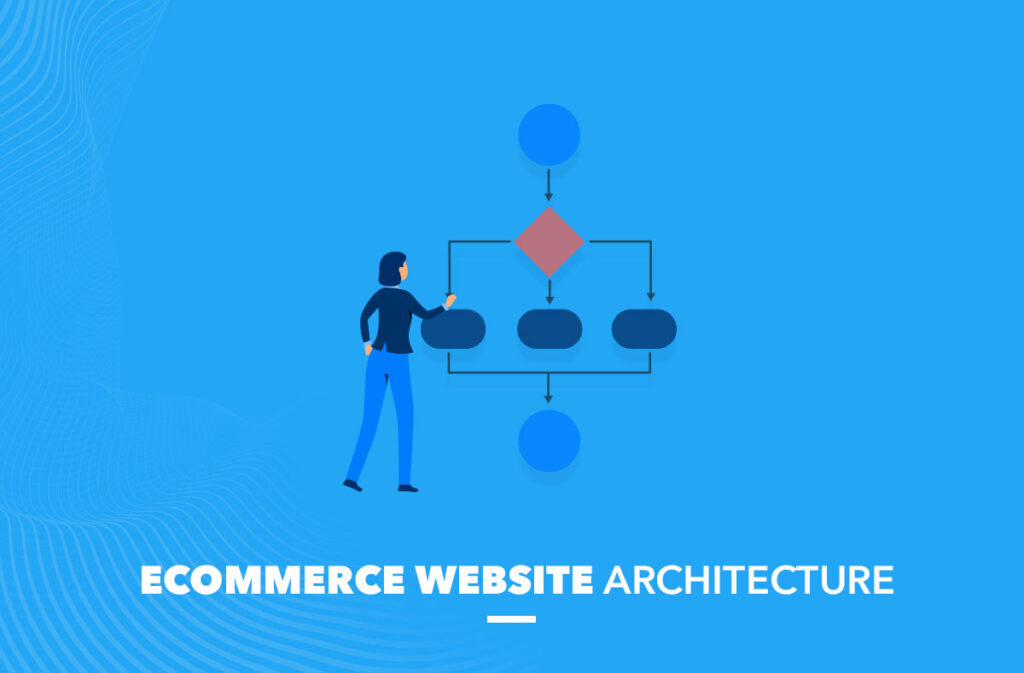
- A good, friendly structure helps both your users and search bots quickly find what they are looking for.
- A flat structure is highly recommended.
- Moreover, a user should be able to find their product from the homepage in three clicks or less (the three-click rule), which basically looks like this:
Homepage ➔ Main Category ➔ Sub-Category (Optional) ➔ Product Page
Product Categories
Your catalog is the foundation of your site’s architecture. You have to create the best way of organising your product:
- You can use different organisation systems, starting with product type and subtypes, the target user (usually by gender), and finalising with attributes such as size and color.
- If a product category has too few products, remove the category altogether.
Navigation and Depth
You want your users and search engines to reach their target in the shortest time possible. This is what we define as site depth- the number of clicks it takes to move from the homepage to the desired product. Combining navigation systems is typically recommended, starting with:
- Global navigation– Static main menu that is present in all pages
- Local navigation– customized menus for different sections of your site
- Contextual navigation– links within the content pages that point to products or product categories
- Breadcrumbs– essential for good user experience and SEO. It alerts on the specific location within the site and exemplifies good practice in navigation hierarchy.
Pagination
Pagination is what sorts out your product catalogue into distinct pages. The classic pagination uses numbered links. It is simple, straightforward, and SEO friendly as the URLs are uniquely crawlable. Others include:
- Load More buttons– These improve the user experience somewhat. However, search bots struggle to view the content that is displayed after the button is clicked.
- Infinite Scrolling– try to familiarise by social media. It keeps users for longer, but there’s always the risk that search bots won’t see past the first loaded product page.
The simplest approach is often the best for eCommerce SEO as it guarantees that your site remains easily accessible and indexable at all times.

eCommerce SEO: On-Page Optimisation
The SEO work you do depends on the page you are working on. Landing pages, category pages, and product pages have distinct requirements. Hence, each requires its own unique approach.
Product Pages – Ecommerce SEO Best Practices
- A product page is where a user decides whether they will buy or not. Each element in the page should subliminally encourage them to go through with it.
- For titles and meta descriptions, use catchy titles that reflect the thoughts of a customer. Always include the product name, the brand, and the most compelling attributes about it. The meta description should reinforce that encouragement to click.
- Each product name should have a clear heading (H1). H2s should offer additional information, like technical specs.
- Only use high-quality images, captured from different angles. Use video where demonstrations can better showcase the product in use and sway the decision. Add descriptive alt text that describes the image and states the product’s purpose.
- Avoid manufacturer copy at all times because it does more harm than good. When different retailers use the same exact text, your content will be flagged as duplicated and its visibility severely limited. Write unique descriptions for every product. Focus on the benefits of the product and the problem it is going to solve. Say what your customer wants to hear.
- Invest in your backlinks. Content from your other pages should link to product pages, which should, in turn, link to related product pages.
Category Pages
You should also focus on Category pages while thinking about how to do SEO for ecommerce website.
- You should support your ranking by integrating popular keywords to increase your organic revenue.
- Create content that helps a user understand the category and make an informed choice.
- The content should be descriptive enough to be useful, but short enough not to push the product grid too far down.
Some more ecommerce SEO tips for category pages
- Optimize the layout and filters so users can quickly and easily find what they are after.
- Link internally as previously mentioned.
- Use schema to help search engines understand the products listed on each page.
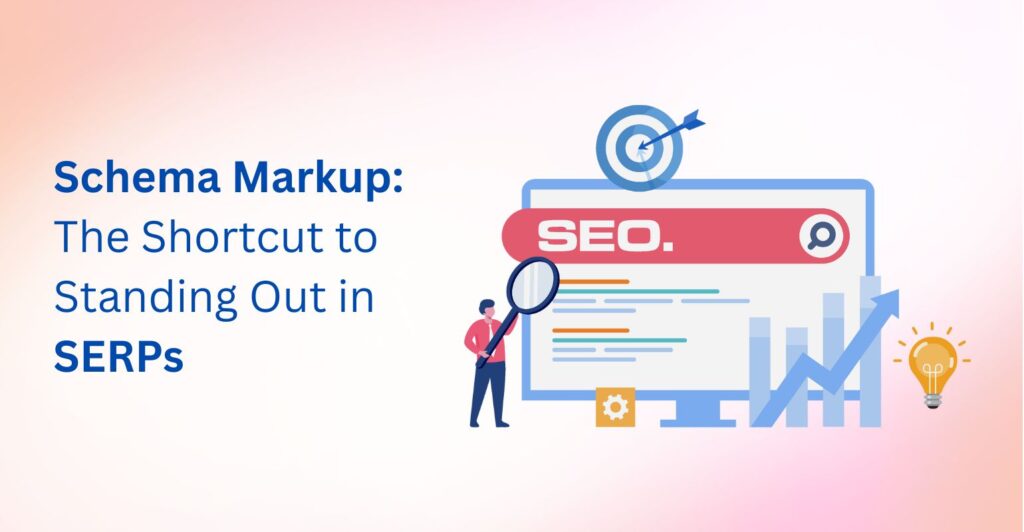
Structured Data
Schema markup is code added to your website to translate product descriptions into data that search engine bots can easily extrapolate. Implementing structured data elevates your listings higher in search engine result pages by showing rich snippets such as:
★ ★ ★ ★ ★ (4.8 out of 5) – 142 Reviews | In Stock | $89.99
The addition of product reviews, aggregate ratings, and current offers schema to product pages enables search engines to directly display the same within search pages. This visualization improves organic conversion rates and attracts better traffic.
The relationship between SEO and GEO
As AI-driven product discovery becomes more and more integral in digital marketing, the lines between SEO and GEO (generative engine optimization) are becoming harder to differentiate.
- SEO tries to improve performance metrics, links, and formatting to increase web rankings.
- GEO repackages your digital assets for extraction, citation, and presentation on different AI platforms.
- However, the methods follow the same fundamentals: Experience, Expertise, Authoritativeness, and Trustworthiness (E-E-A-T).
How to improve SEO of ecommerce website?
- For your eCommerce store to work well with both SEO and GEO, you must optimise by providing direct answers.
- Use tables, bullets, and Q&As on products and FAQ pages so AI models can easily analyze and display your content.
- Build strong entity signals to encourage trust.
- Your About Us, Customer Support, and Contact Pages are sufficiently detailed and easily accessible.
- Build verifiable trust through honest third-party reviews and brand mentions across different external platforms and websites.
Your brand is more likely to be mentioned if the recommendations in support are consistent across the web.
Summing Up
eCommerce SEO, much like conventional SEO, is a continuous investment. You will have to deal with changes in inventory, shifting demands, and platform updates that will require technical adaptation. To remain successful, regularly audit your site’s technical health, implement strategic intent-based keyword mapping, and generate unique content for your pages.
Maintain your site’s Core Web Vitals, format your product data as required, and continually adapt to new search behavior. This is how you can create an organic funnel that lowers customer acquisition costs and drives sustainable, long-term growth for your online business. You can rely on a reputable, experienced service provider for your website if you need someone to help you with ecommerce SEO.